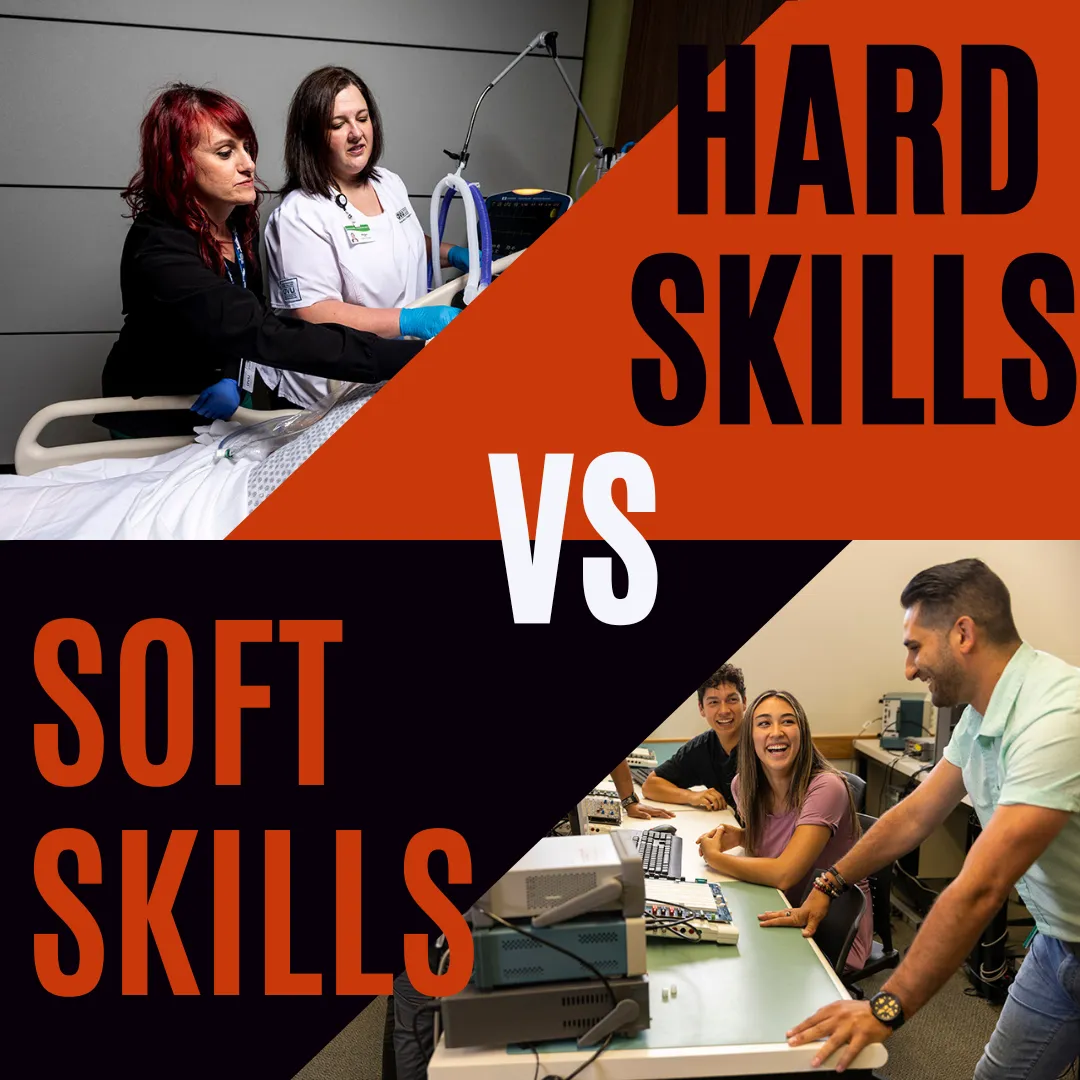
Hard Skills vs. Soft Skills: Why You Need Both (And What They Actually Mean)
Here's something most job seekers get wrong: they think landing a job is about checking boxes on a requirements list.
It's not.
Employers aren't just scanning for keywords anymore. They're asking a different question: "Can this person actually do the work AND work well with others?"
That's the difference between hard skills and soft skills. And if you don't know how to show both, you're leaving opportunities on the table.
Hard Skills: The Stuff You Can Prove
Hard skills are what you'd put on a test. They're measurable, teachable, and usually specific to a job.
Think of them as your technical toolkit, the things you learned in class, picked up through training, or figured out on the job.
Real examples:
You can code in Python
You know how to edit video in Premiere Pro
You've run Facebook ad campaigns
You can read a blueprint
You speak Spanish fluently
These aren't personality traits. They're concrete abilities you can prove with a portfolio, certificate, or live demonstration.
How you build hard skills
You take the course. You do the project. You get the certification. Repeat.
The good news? Hard skills are straightforward to learn. There's a clear path from "I don't know this" to "I can do this."
Tools like SkillCo actually track the hard skills you're building through coursework and organize them into a profile employers can see. no more wondering if you're remembering to list everything.
Soft Skills: The Stuff That Actually Gets You Hired
Now here's where it gets interesting.
You could be the best programmer in the room, but if you can't explain your code to the team or handle feedback without getting defensive, you're going to struggle.
That's where soft skills come in. They're the "how" behind the "what."
Real examples:
You communicate clearly (even when explaining complicated stuff)
You don't fall apart when priorities shift
You can lead a project without micromanaging
You solve problems instead of just complaining about them
You manage your time without needing constant reminders
There's no certification for "good at teamwork." But everyone notices when you have it—or when you don't.
Why soft skills matter more than you think
Here's a stat that should change how you think about job hunting: 92% of hiring managers say soft skills matter as much as (or more than) hard skills. That's from LinkedIn's own research.
Why? Because companies can train you on their software. They can't train you to care, communicate, or think critically. You either show up with those traits or you don't.
The Real Difference Between the Two
Let's break it down:
How you learn them:
Hard skills = classroom, courses, practice
Soft skills = experience, feedback, self-awareness
How you prove them:
Hard skills = test scores, certifications, portfolios
Soft skills = how you show up in conversations, interviews, and group work
How they age:
Hard skills = can become outdated (looking at you, Flash developers)
Soft skills = timeless and transferable to any job
How they impact your career:
Hard skills = get you in the door
Soft skills = get you promoted
You need both. Period.
Why Employers Are Done With Degree-Only Hiring
Something big is happening in hiring right now.
Companies like Google, IBM, and Tesla aren't requiring degrees anymore. They're looking at skills instead. Harvard Business Review found that almost 50% of employers have dropped degree requirements from at least some roles.
Translation? Your ability to show what you can actually do matters more than where you went to school.
But here's the catch: you have to be able to show it. That means having a clear, organized way to present both your technical abilities and your interpersonal strengths.
How SkillCo Makes This Easier
When you use SkillCo, it automatically identifies the hard and soft skills you're learning, whether that's through classes, projects, or experience and organizes them in a way employers actually understand.
No more guessing what to list on your resume. No more underselling yourself because you forgot half of what you've learned.
It tracks both skill types and packages them into a profile that shows the full picture of what you bring to the table.
Why Balancing Both Is Non-Negotiable
Technology changes fast. The software you learn today might be obsolete in five years.
But being able to think critically, communicate well, and adapt to change? Those skills don't expire.
Employers know this. They can teach you their CRM system. They can't teach you to show up on time, take initiative, or work well under pressure.
If you only focus on hard skills, you become replaceable the moment someone learns a newer tool. If you only lean on soft skills, you won't have the technical depth to stand out.
The people who win are the ones who build both.
The Bottom Line
Hard skills open doors. Soft skills keep them open.
If you want to be competitive in today's job market, you can't just be good at one thing. You need to be technically capable and easy to work with. You need to show expertise and adaptability.
At SkillCo, we're helping people recognize the skills they already have, develop new ones, and showcase everything in a way that makes sense to employers.
Because at the end of the day, getting hired isn't about having the perfect resume. It's about proving you can do the work—and that people will actually want to work with you.
Keep learning. Stay adaptable. Build both sides of your skill set.
That's how you stay ahead.